Peptides for weight loss — a plain English guide
Which research peptides are studied for fat loss, how they work, and how they compare to approved GLP-1 medicines — explained in plain English.
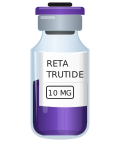
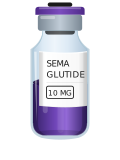
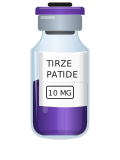
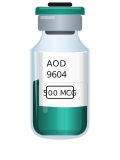
Several research peptides are studied specifically for weight loss and metabolic health. The GLP-1 class compounds (semaglutide, tirzepatide, retatrutide) are the most researched and show the strongest data. AOD 9604 offers a different mechanism — direct fat cell stimulation without the hunger regulation pathway.
The compounds studied for weight loss
How GLP-1 peptides work
GLP-1 (glucagon-like peptide 1) is a hormone naturally produced in your gut after eating. It signals to your brain that you are full, slows stomach emptying, and improves insulin response. GLP-1 receptor agonists mimic this effect — but for longer and more powerfully than the natural hormone.
How AOD 9604 is different
AOD 9604 is a fragment of human growth hormone (amino acids 176-191) developed at Monash University in Australia. Unlike GLP-1 compounds, it does not affect appetite. Instead it works directly on fat cells via beta-3 adrenergic receptors — stimulating lipolysis (fat breakdown) without the growth-promoting effects of full growth hormone.
What the research shows
Which to research first?
If you are researching GLP-1 compounds, retatrutide represents the highest-opportunity compound — it has the strongest Phase 2 data, is unscheduled across most markets (no prescription needed for research), and has near-zero competition in search results as of 2025.
Ready to source Retatrutide?
We verify COA documentation and purity standards before listing any vendor. Select your market to see our verified shortlist.