The Wolverine Stack
BPC-157 and TB-500 are two of the most researched recovery peptides available. Combined, they target tissue repair through complementary mechanisms — one focusing on tendon and gut healing, the other on muscle and angiogenesis. This is why researchers study them together.
- Accelerated tendon and ligament repair
- Gut lining protection and healing
- Reduced systemic inflammation
- New blood vessel formation at injury sites
- Complementary mechanisms — broader healing coverage
What is The Wolverine Stack?
BPC-157 + TB-500 — why combine them?
The Wolverine Stack is an informal name used in the research community for the combination of BPC-157 and TB-500. The name comes from the Marvel character known for accelerated healing — which is exactly what these compounds are studied for.
Neither compound is approved for therapeutic use. Both have extensive preclinical research — primarily in rodent models — showing accelerated healing of tendons, ligaments, muscles and gut tissue. No completed human clinical trials exist for either in this combined form.
BPC-157 and TB-500 work through different biological pathways. BPC-157 primarily promotes tendon attachment and gut protection. TB-500 regulates actin and drives angiogenesis. Together, they cover more of the healing cascade than either alone — which is why researchers combine them.
Plain English
What this means for you
If you are researching compounds for injury recovery — tendons, ligaments, muscle tears, or gut issues — BPC-157 and TB-500 are the two most studied peptides for this purpose.
Think of BPC-157 as the specialist for tendon attachment and gut lining repair. TB-500 is more systemic — it promotes new blood vessel formation and reduces inflammation across the body.
Combined, they cover different parts of the recovery process — which is why they are commonly studied together rather than separately.
The compounds
What's in this stack
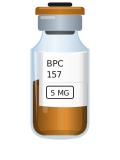
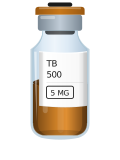
Why they work together
Complementary mechanisms
Source this stack
Where are you based?
Select your market to see COA-verified vendors for both compounds. We only list vendors with third-party purity certification.
Available from verified vendors. Click to view options for your selected market.
View BPC-157 vendors →Available from verified vendors. Click to view options for your selected market.
View TB-500 vendors →